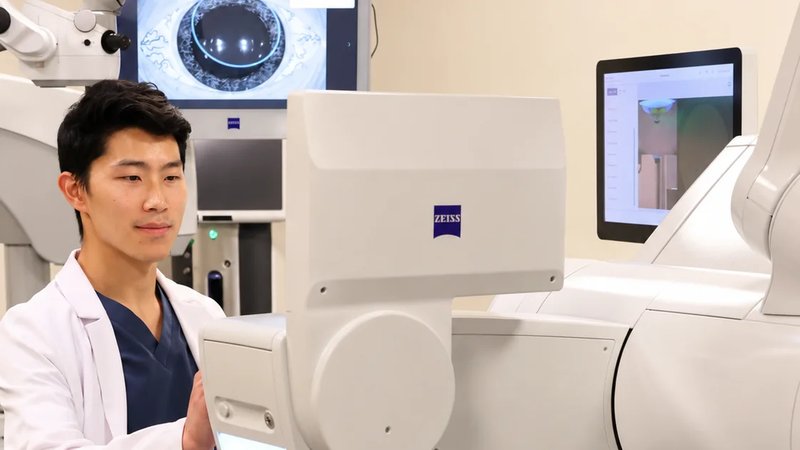
WaveLight Plus LASIK
Modern LASIK, Personalized to Your Eye
 Dr. Joseph LingRefractive surgeon
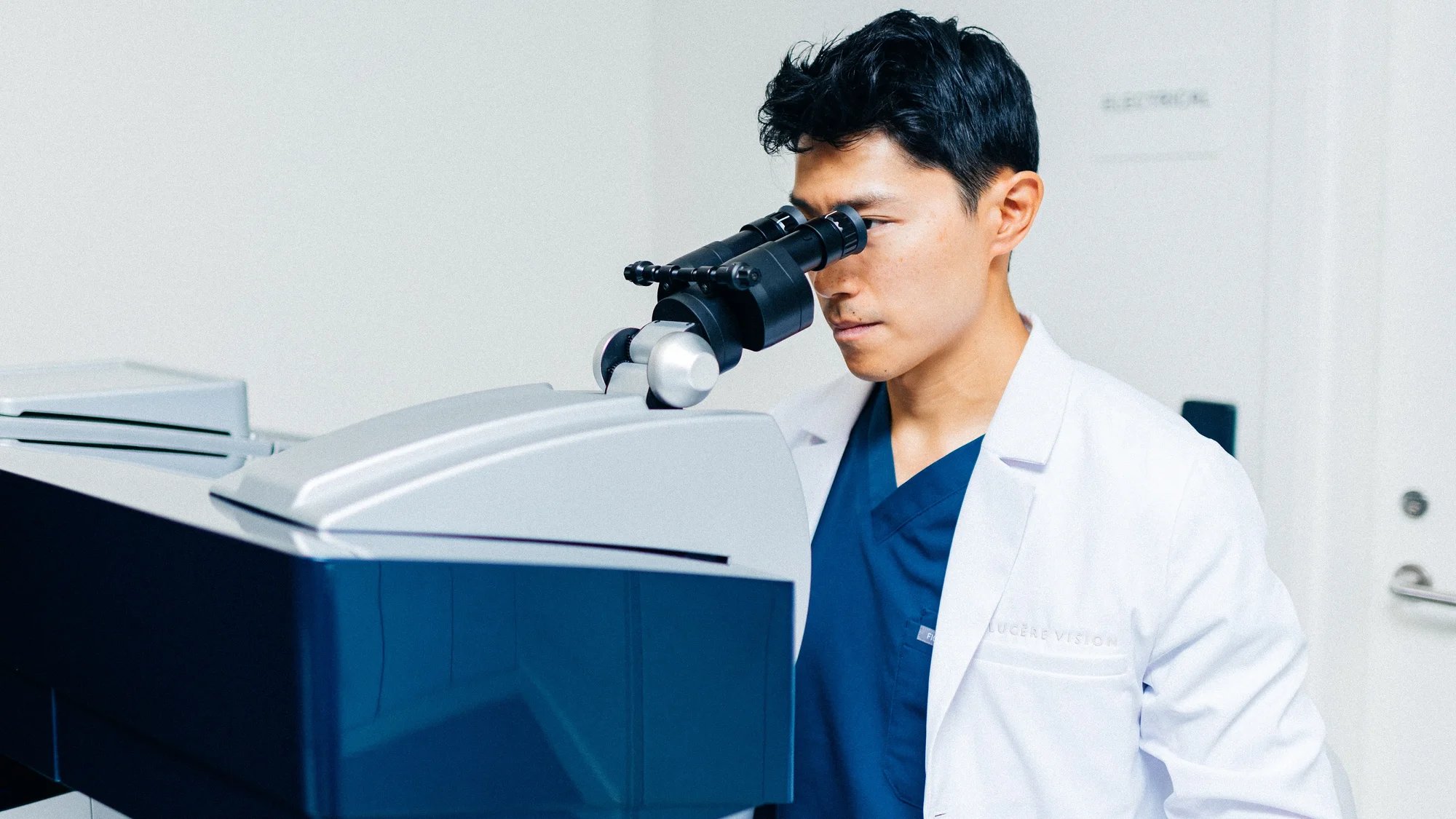
Modern LASIK, built on a proven foundation
WaveLight Plus is what I call modern LASIK: a personalized laser treatment planned from a 3D model of your own eye, not from a generic one. It was approved by the US FDA in March 2025 and launched in the United States and Canada later that year.
LASIK itself is one of the most studied elective procedures in medicine, with decades of refinement behind it. WaveLight Plus builds upon that foundation with detailed measurements and more individualized planning. Combined with modern surgical technique designed around stability, recovery, and the quality of your vision, LASIK today treats more than just the number on the eye chart.
If you are interested in life without glasses or contact lenses, here is what WaveLight Plus is, how it works, and how to know whether it is right for you.
What makes WaveLight Plus different
Traditional LASIK is planned mainly from your glasses prescription and the shape of the front of your cornea. WaveLight Plus measures your eye's entire optical system and tailors a treatment to it.
The Sightmap diagnostic. Before surgery, a single non-contact instrument called Sightmap measures your eye in one sitting. It captures the front and back surfaces of the cornea, corneal thickness, the depth of the anterior chamber, the position of the natural lens, the length of the eye, and a wavefront map of how light actually passes through it. Together, that amounts to more than 100,000 data points per eye.
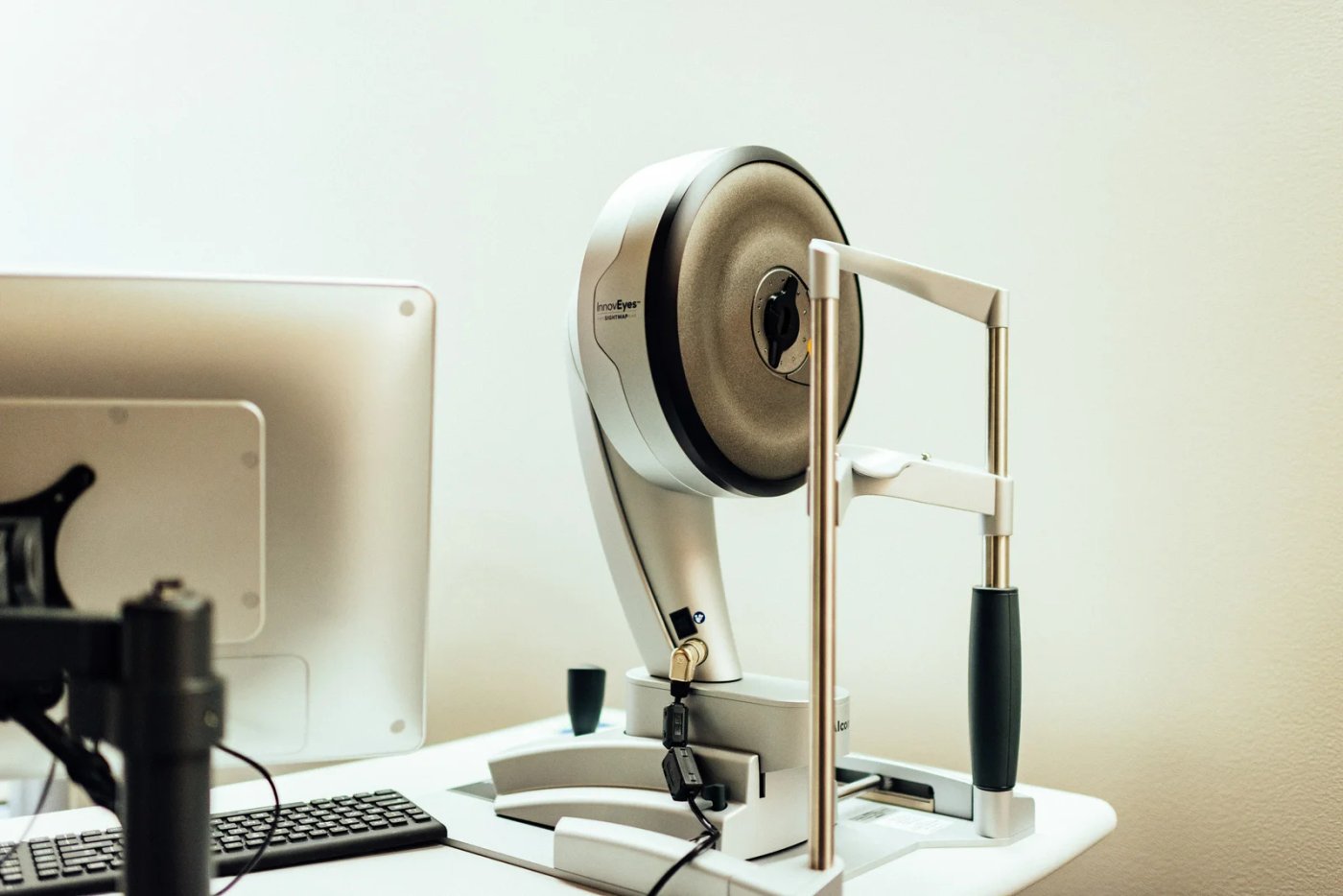
Your digital eye twin. Those measurements are combined into a three-dimensional model of your eye.
Ray tracing. The planning software then traces how light rays travel through that model and adjusts the proposed treatment, step by step, until the rays focus as precisely as possible on the retina. Earlier customized treatments applied measurements to a standard, average eye. Ray tracing uses your own anatomy, making the treatment fully personalized to your eye.
Fine-grained planning. Treatment planning works in increments as fine as 0.01 diopters. For comparison, a glasses or contact lens prescription is written in steps of 0.25 diopters.
An integrated workflow. Measurement, planning, and treatment data remain within a single connected system rather than being transferred manually between separate devices. This consolidation is designed to improve accuracy and make the process more reproducible.
Beyond 20/20: the quality of your vision
Glasses and most contact lenses correct only two things: nearsightedness and astigmatism. They do not address the subtle optical imperfections called higher-order aberrations. These imperfections we are born with and develop arise from small irregularities in the cornea and elsewhere in the eye and can appear as glare, halos, starbursts, or softer vision at night.
Because WaveLight Plus models the whole eye, it can treat these imperfections along with your prescription. The purpose is not only freedom from glasses but also sharper, crisper vision, especially in low light when your pupils dilate.
How I perform WaveLight Plus at Lucere Vision
By combining modern technology and techniques, my approach to LASIK is a series of refinements designed to protect your cornea, support a comfortable recovery, and make the results as stable as possible.
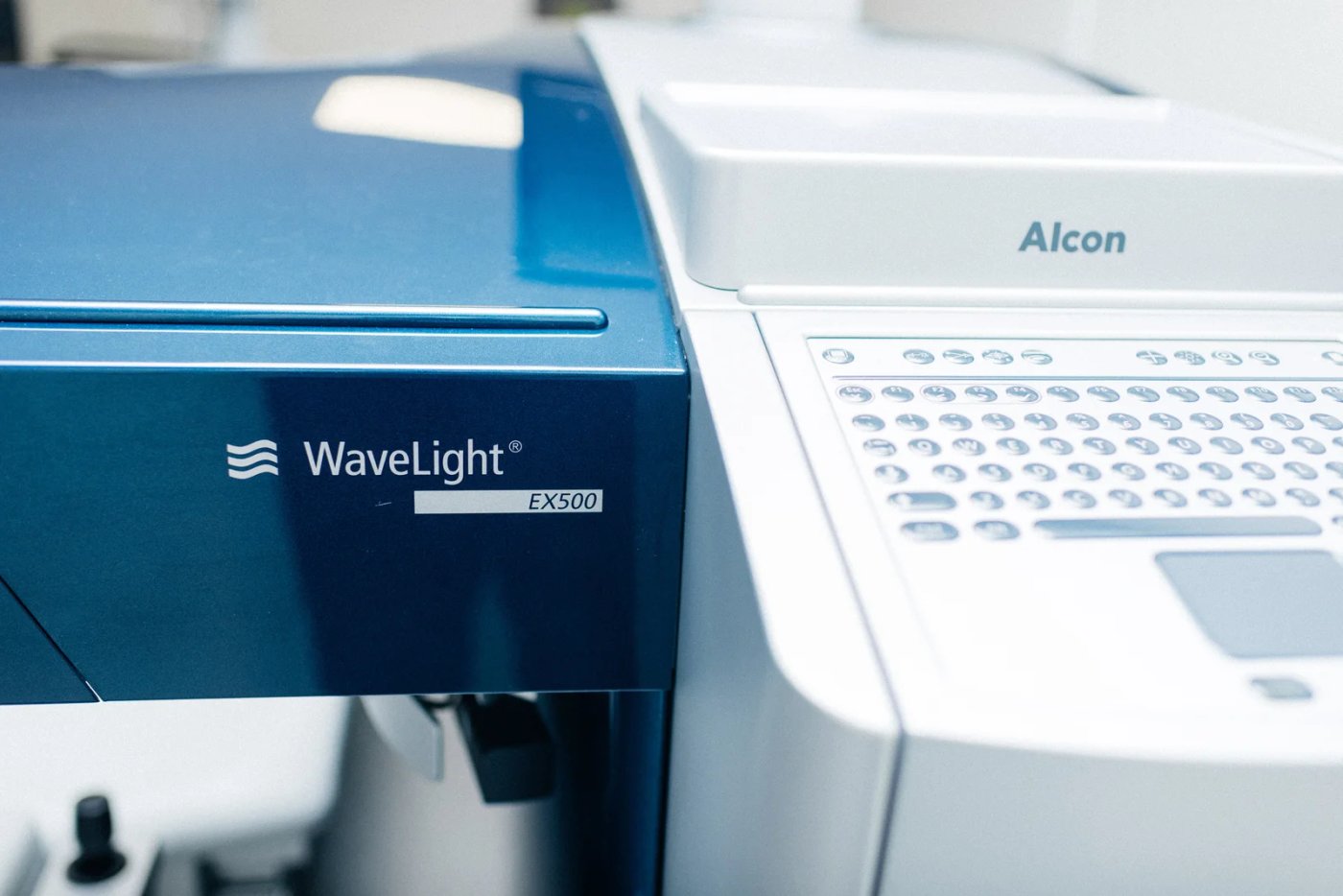
- Exact measurements are taken multiple times for consistency. The treatment is only as good as the measurements behind it. Refractions and Sightmap scans must meet the platform's quality criteria before I plan a treatment.
- A 90-micron flap to preserve corneal tissue. I create a thin flap of 90 microns, roughly the thickness of a sheet of paper. A thinner flap leaves more of the cornea's natural strength untouched and is intended to reduce post-operative sensitivity and dryness.
- Superior hinge placement for biomechanical stability. I position the flap's hinge at the top of the cornea, which provides better biomechanical stability.
- Active eye tracking. The laser tracks your eye throughout treatment, following its small, natural movements so that each pulse lands where it is planned.
This is an evolution of an already established, well-studied procedure. What has changed is how precisely it can now be planned for the individual eye, and how carefully it can be delivered.
What the published results show
The numbers below come from published studies. Results vary from person to person.
Study | Eyes | Result at 3 months |
|---|---|---|
Real-world private practice study (2023) | 400 eyes (200 patients) | 100% saw 20/20 or better without correction; 89% saw 20/16; 50% saw 20/12.5 |
Scroll to see all columns →
Who is a candidate
WaveLight Plus is FDA-approved for adults 18 and older with nearsightedness, with or without astigmatism, within these limits:
- Up to -8.00 diopters of nearsightedness
- Up to -3.00 diopters of astigmatism
- A combined prescription (spherical equivalent) between -1.00 and -9.00 diopters
- A stable prescription, changing no more than 0.50 diopters over the prior year
It is not approved for farsightedness. Your eye also needs healthy, sufficiently thick corneal tissue and a high-quality Sightmap scan.
If your prescription falls outside the WaveLight Plus range, including farsightedness, I perform wavefront-optimized LASIK. It is a well-established treatment, designed to preserve the cornea's natural shape and limit the night-vision side effects seen with older laser profiles.
In summary, WaveLight Plus is one of several modern vision correction options. Depending on your prescription, corneal anatomy, age, and visual goals, I may also recommend SMILE Pro, EVO ICL, or custom lens replacement. As a surgeon who performs all modern vision correction procedures, my recommendation is the procedure that best fits your eye, not a one-size-fits-all approach.
What to expect
- Consultation. A comprehensive eye exam, your eye measurements, and an unhurried conversation about your goals and options.
- Treatment planning. Your digital eye twin is used to plan a treatment for each eye individually.
- Surgery day. The procedure is all-laser, and numbing drops keep you comfortable. The procedure itself takes about 5 to 10 minutes per eye, and the laser treatment within it lasts only seconds.
- Recovery. Most people see well the next day and return to normal activity. Your post-operative exams are at 1 day and 1 month.
Your next step
The best way to know whether WaveLight Plus is right for you is a consultation. You will leave with a clear answer about your candidacy and a recommendation customized to your eyes, whichever procedure it turns out to be.
Sources
- FDA Summary of Safety and Effectiveness Data, WaveLight EX500 with InnovEyes Sightmap (P020050/S043), approved March 5, 2025
- Alcon, Wavelight Plus patient information and indications
- Healio, Alcon launches Wavelight Plus in US and Canada (Sept 2025)
- Ray-tracing-guided myopic LASIK: real-world clinical outcomes. J Cataract Refract Surg. 2023;49(11):1140-1146.