What Is Custom Lens Replacement?
Benefits, Lens Options, and Recovery
 Dr. Joseph LingRefractive surgeon

Custom lens replacement (CLR), also called refractive lens exchange, is an elective procedure that replaces the aging natural lens inside your eye with an artificial intraocular lens (IOL) to reduce dependence on glasses and contact lenses. If you’re reaching for readers more often or feeling limited by changes in your vision, CLR may help address those changes before you develop a visually significant cataract.
Custom lens replacement builds on decades of experience with cataract surgery and its well-established record of safety and effectiveness. Over that time, IOL technology has improved dramatically. For the right individual, modern IOLs can improve the range of vision lost through presbyopia while addressing changes in the clarity of the aging natural lens.
As these IOL platforms have matured, I have chosen to focus my surgical practice on custom lens replacement, especially for people seeking alternatives to readers, bifocals, and progressives. With cataract surgery, removing a visually significant cataract is often the primary reason for surgery. With custom lens replacement, the elective nature of the procedure and the convenience it can offer are central to the decision. That shapes how I evaluate patients and plan their procedures. That said, I evaluate my patients for cataract surgery in a very similar way.
There is also the benefit of not developing a cataract in the future, because the aging lens has already been replaced. But I personally focus a person’s candidacy on the immediate performance, benefit, and satisfaction they can reasonably expect from the procedure. Those should be the primary reasons for choosing custom lens replacement.
Why does our vision change with age?
To understand why this procedure exists, we first need to understand how our eyes age.
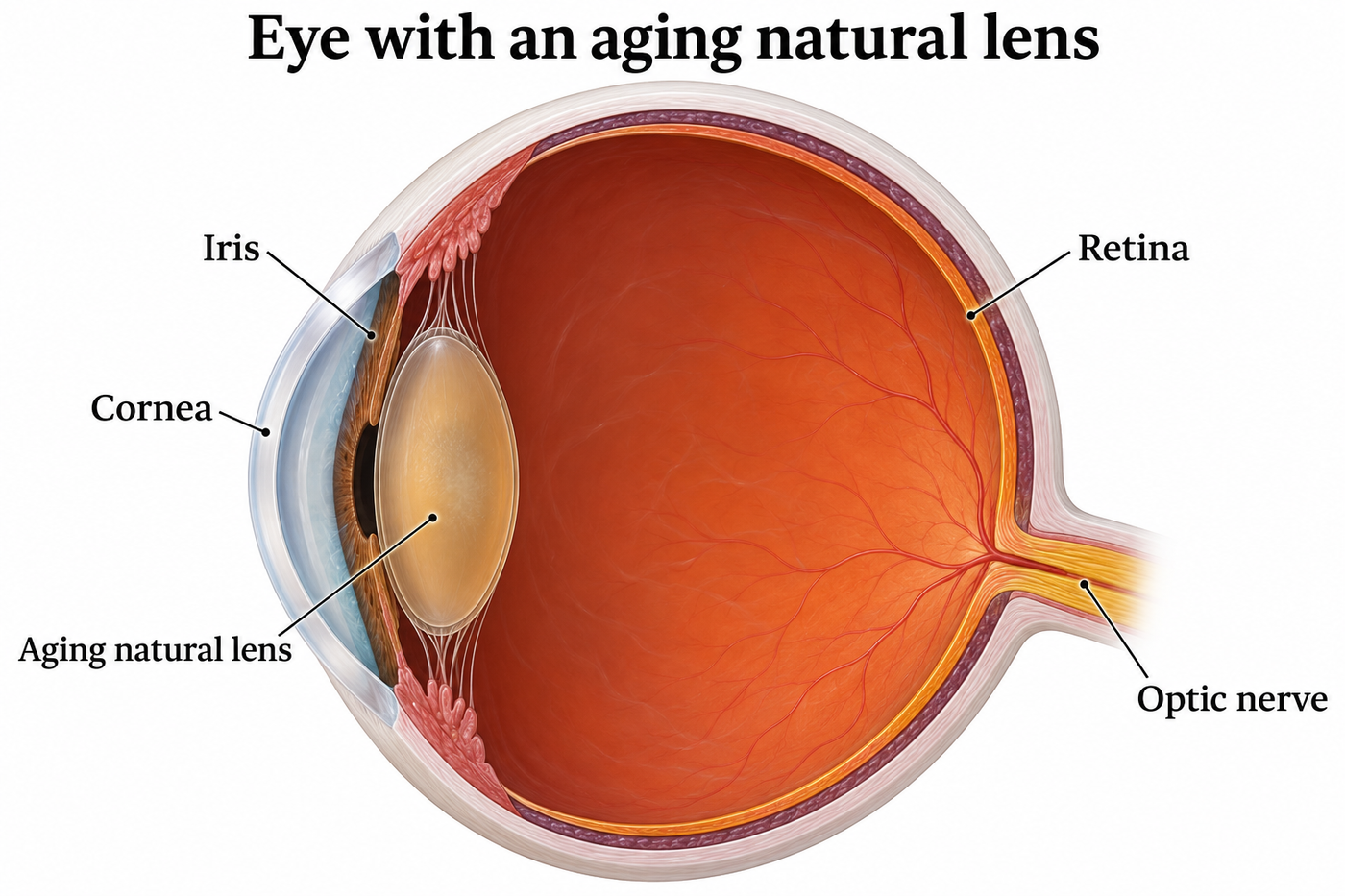
When we are young, the natural lens inside the eye, called the crystalline lens, is clear and flexible. Small muscles within the eye help change its shape, allowing us to shift our focus from far to near. This act of refocusing is called accommodation.
Whether you use glasses to see distance or see distance naturally without any visual aid, when you shift your focus to something up close, you are using accommodation. When that becomes difficult with age, the condition is called presbyopia. Most people begin noticing it sometime in their 40s, often in their mid- to late-40s. This is when reading glasses, bifocals, progressive glasses, multifocal contact lenses, and monovision contact lenses begin to enter the picture.
The reason is that the clear, flexible lens we have lived with throughout childhood and our younger adult lives gradually becomes harder and less flexible. It becomes less responsive to the eye’s efforts to refocus up close. Those additional visual aids help make up for the focusing ability our natural lenses can no longer provide as easily.
You may find yourself holding things farther away, increasing the font size on your phone, or needing brighter light to read comfortably.
You may also hear the term “dysfunctional lens syndrome” used to describe this spectrum of age-related changes in the natural lens. These changes are part of aging, just as we experience changes in other parts of the body.
As the lens continues to age, it may become cloudy and less flexible. At that point, the quality of vision can change more noticeably. Loss of contrast, glare, halos, and changes in the glasses prescription may become more pronounced. When the natural lens becomes cloudy, we call it a cataract.
Would laser vision correction or ICL correct the age-related changes that occur in the natural lens?
Laser vision correction and implantable collamer lenses (ICLs) can correct nearsightedness, farsightedness, and astigmatism, but they do not reverse the age-related changes occurring within your natural lens.
Think of it this way: correcting your prescription with LASIK or ICL is like placing a perfectly clear lens in front of an aging lens. You may improve your vision, but you are still looking through the same natural lens, which will continue to age over time.
Custom lens replacement (CLR) takes a different approach. By replacing the aging natural lens with an advanced intraocular lens (IOL), CLR directly addresses the source of age-related changes in focusing ability and lens clarity. Depending on the IOL selected, it can also reduce dependence on both distance and reading glasses.
If you are younger than 50 and have little to no difficulty with reading or near vision, laser vision correction or ICL will often remain the preferred options. A healthy, youthful natural lens has an extraordinary ability to adjust focus between distances, something that no current IOL can fully replicate. For this reason, we generally recommend preserving the natural lens until age-related changes become sufficiently significant to justify replacement.
If you previously underwent LASIK or ICL surgery, you may still be a candidate for CLR later in life. The timing depends on your visual needs, the condition of your natural lens, and a personalized discussion with your surgeon.
How does custom lens replacement work?
Custom lens replacement works by replacing the aging natural lens with a synthetic intraocular lens. The IOL has built-in focusing power, and different lens designs offer different ways to improve distance vision, extend the range of vision, and reduce dependence on glasses or contact lenses.
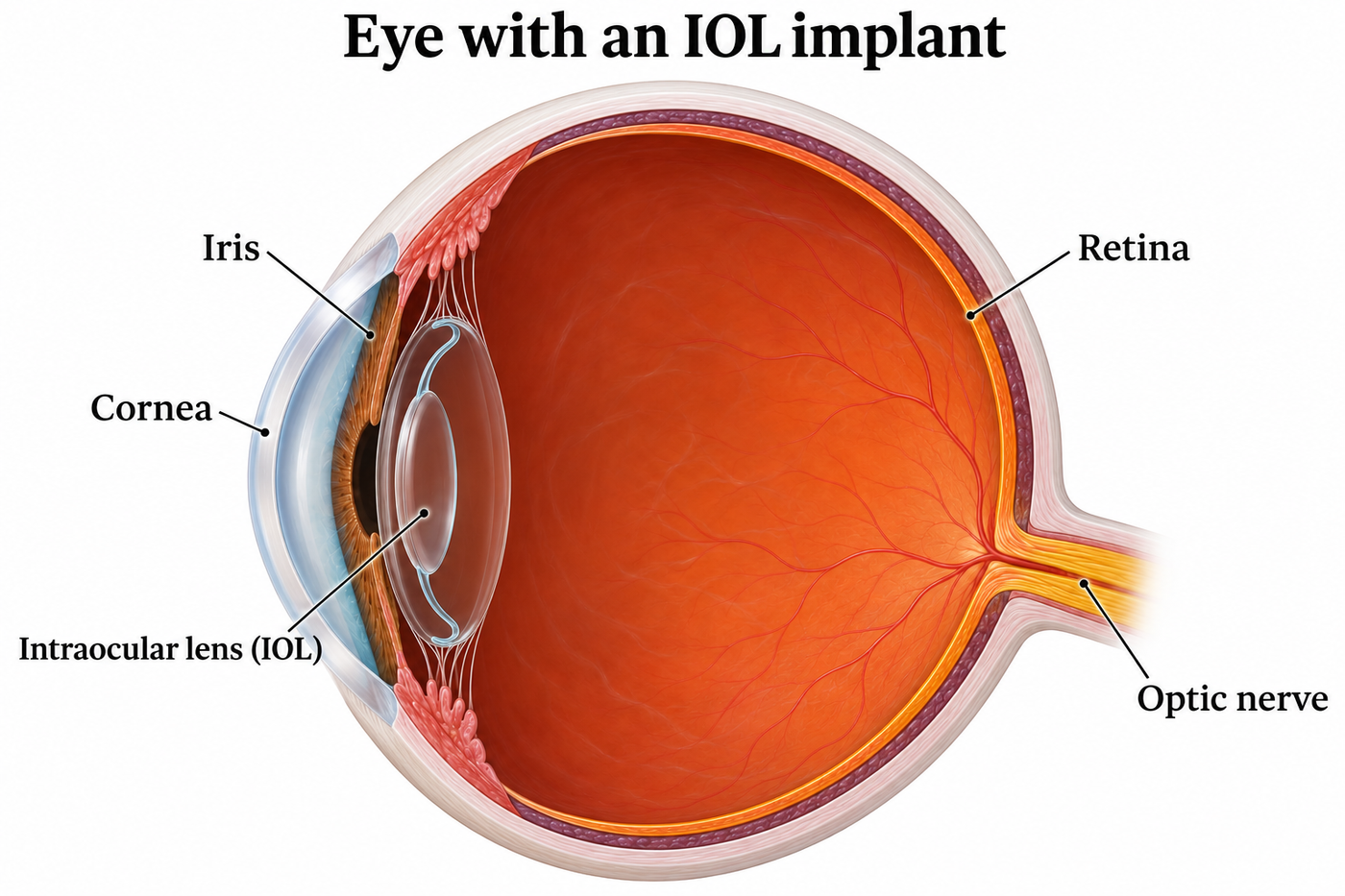
These lenses do not simply turn the clock back and give us the same flexible lens we had when we were young. Instead, they use different optical designs to compensate for some of the loss of focusing ability.
Replacing the aging natural lens also removes one of the major sources of vision changes people experience over time. The IOL is designed to remain in the eye for life. CLR does not stop other conditions that may or may not occur to the eye with age.
Which lens implant is right for you?
There are many categories of IOLs to consider, and no single perfect lens. Each has its strengths and its tradeoffs. Some prioritize the quality of vision at a particular distance. Others offer a broader range of focus, with tradeoffs such as halos, glare, or reduced contrast in certain conditions.
At Lucere Vision, we offer the major categories of modern IOL technology, including:
- High-definition monofocal lenses
- Extended depth of focus lenses
- Diffractive multifocal lenses, including trifocal designs
- Toric options within several lens categories to address astigmatism
- Light-adjustable lenses
The reason to offer a range of options is to meet different needs. Eye conditions, previous eye surgeries, expectations, work, hobbies, and lifestyle all influence which approach may be best suited to a person. I will discuss these lens categories in more detail in another article.
The goal is to reduce the need for glasses. Good candidates can expect significant freedom and improved vision, though the degree of independence from glasses may vary based on individual needs.
Can you develop cataracts after lens replacement?
Because the natural lens has been removed, it can no longer develop a cataract.
The implanted lens is designed to remain in the eye for life. It is also important to understand that lens replacement does not stop the rest of the eye from aging. The cornea, retina, and other structures can still change and affect vision.
What is recovery like?
At Lucere Vision, custom lens replacement is performed in our office-based surgery suite. For eligible candidates, we conveniently perform procedures for both eyes on the same day, allowing recovery to occur together.
The procedure itself may take around 10 to 15 minutes per eye. Many individuals notice substantial visual improvement within the first few days. Some can return to desk work and light daily activities within three to five days, while healing and adaptation to the new lenses continue.
Recovery, side effects, and individualized risk factors will be discussed in detail at the consultation.
How do you know if you’re a candidate?
The first step is to determine whether replacing the lens would offer a meaningful benefit. We assess your dependence on glasses or contact lenses, your prescription, the clarity of the natural lens, and the health of the rest of the eye. We then explore which implant options best suit your needs and expectations.
The way to know whether you are a candidate is to have a detailed examination with a surgeon experienced in custom lens replacement. That discussion should include what you hope to gain, what your eyes can realistically achieve, and whether another option would serve you better.
For me, the decision comes back to the person in front of me: how their vision affects their life today, what they would like to improve, and whether custom lens replacement can offer a benefit that makes the procedure worthwhile for them.